- Serving Our NJ Neighbors 24/7 (888) 333-2422

 | Yes We Are Open!
Water Heater Noises: What They Mean and When to Worry
Common Water Heater Sounds & What They Might Mean
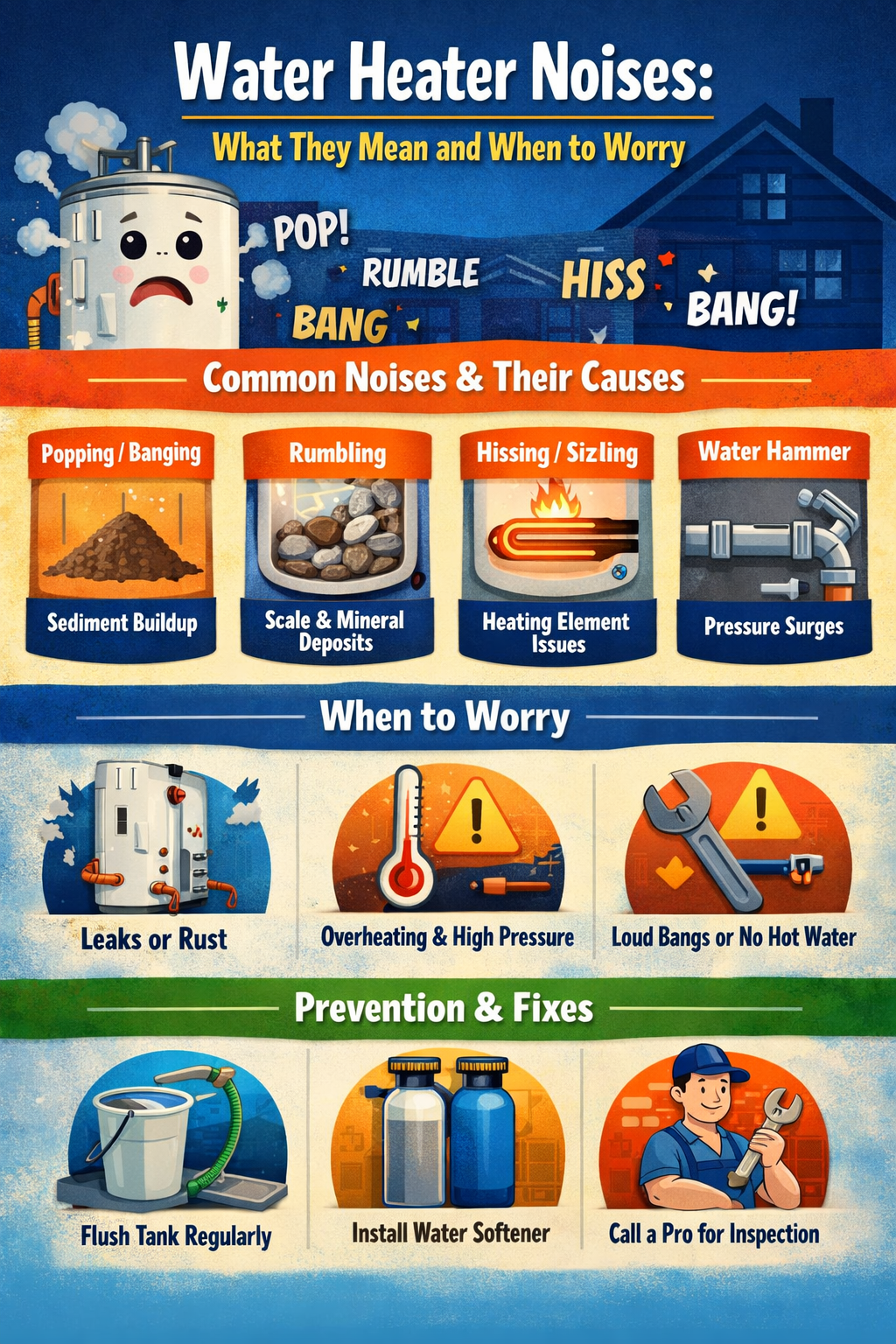
It’s not uncommon to hear noises coming from your water heater—especially as the unit ages—but not all sounds indicate serious trouble. Some of the most frequent noises homeowners report include popping, rumbling, crackling, hissing, or even banging. Each sound has a different underlying cause, and recognizing these early can help prevent expensive repairs or full system failure.
- Popping or Banging: Often caused by sediment buildup at the bottom of the tank. As water gets trapped under the sediment, it heats up and releases steam bubbles that make popping or knocking sounds.
- Rumbling: This is a deeper, vibrating noise usually linked to excessive scale or mineral accumulation. The rumbling comes from boiling water pushing through layers of debris.
- Sizzling or Hissing: Typically heard in electric water heaters when sediment contacts the heating elements, leading to uneven heating or even burnout over time.
- Ticking or Tapping: These are often harmless and caused by expanding or contracting metal pipes or a heat trap in the system.
- Hammering: Also known as “water hammer,” this is caused by abrupt changes in water pressure and can damage pipes or valves if left unaddressed.
While some of these sounds are harmless (or at least manageable), others are early warning signs that your water heater may be on the verge of failure.
When Is a Noisy Water Heater a Cause for Concern?
Not all water heater noises are created equal, but knowing when to act is crucial. In many cases, strange noises are an early symptom of poor maintenance, mineral buildup, or mechanical wear—all of which can be addressed if caught early. However, ignoring these signs could lead to more serious issues, including leaks, reduced efficiency, or even tank failure.
A water heater that pops, bangs, or rumbles regularly is likely working overtime, which decreases its energy efficiency and lifespan. The sediment layer acts like insulation, making it harder for the heating elements to do their job. Over time, this stress can cause cracks in the tank, burned-out heating elements, or increased pressure levels, which are both dangerous and costly.
Also, sizzling or hissing might indicate a leak near electrical components, posing a fire or electrical hazard. If you hear gurgling, high-pitched squealing, or loud bangs, especially alongside reduced hot water supply, discolored water, or visible rust on the tank, it’s time to call a licensed plumber or HVAC specialist. These symptoms may point to valve failure, overheating, or internal corrosion, which require immediate professional attention.
The bottom line: if the noise is persistent, new, or worsening—don’t ignore it. Taking action early can save you hundreds of dollars in repairs or replacements, and more importantly, prevent a sudden breakdown or water damage to your home.
Preventing and Fixing Water Heater Noise Issues
Prevention starts with routine maintenance. Most water heater problems—especially those involving noise—stem from sediment accumulation. Draining and flushing the tank at least once a year can dramatically reduce popping, rumbling, and crackling sounds while extending your unit’s life and efficiency. If you live in an area with hard water, consider installing a whole-house water softener to reduce mineral buildup.
If the sounds persist even after flushing the tank, it could mean the heating element is damaged or that internal parts are deteriorating. In these cases, replacing the element or the unit altogether may be necessary. Similarly, expansion tanks, water hammer arrestors, or anti-siphon valves may need to be installed or replaced to deal with pressure or vibration-related noise.
For gas water heaters, it’s also important to inspect the burner assembly—crackling and sputtering sounds could be due to dust, debris, or improper combustion. This not only affects performance but could also increase your carbon monoxide risk if not maintained properly.
Lastly, always keep an eye on temperature settings. Overheating can create boiling or bubbling sounds and put stress on the tank. For most homes, keeping the water heater at 120°F (49°C) is ideal—hot enough for showers and dishes, but safe and efficient for long-term use.
If you’re unsure whether your water heater noises are normal or dangerous, the safest route is to contact a professional HVAC or plumbing technician for a full inspection.